What Happens Before Your Home Ever Reaches the Lot
Most of the work that decides how your home holds up happens weeks before it ever touches your property.
September 3, 2026 · 3 min read
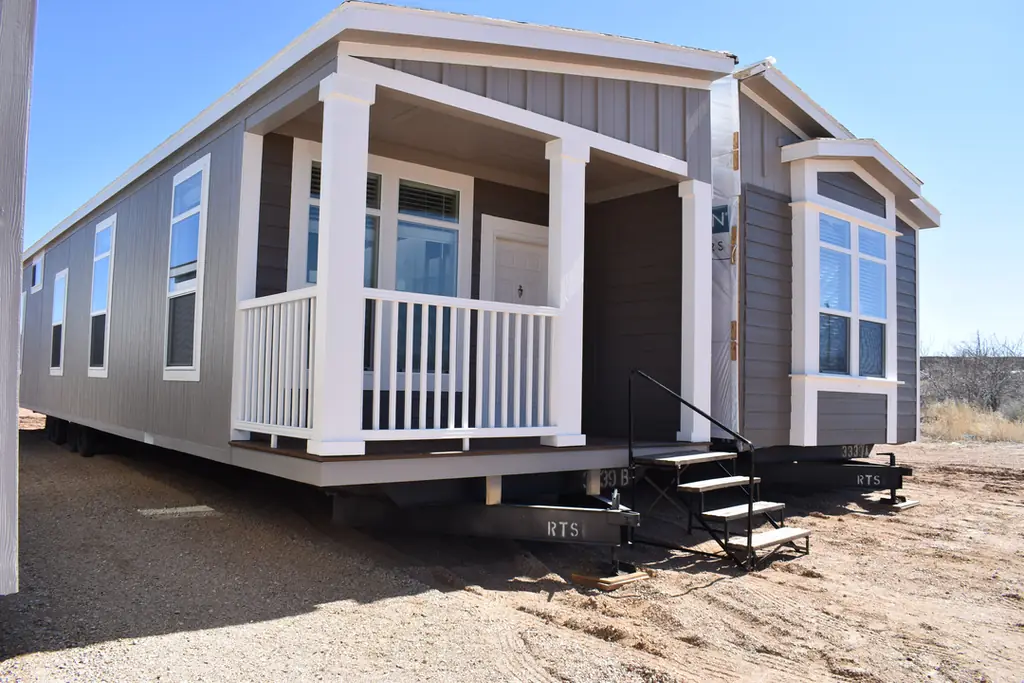
When people picture a manufactured home going up, they usually picture the day it arrives on the lot. That's the visible part. It's also the last step in a process that starts weeks earlier, indoors, on a factory floor where the weather never gets a vote. Understanding what happens before delivery is the difference between buying a house and buying a house you actually understand.
It starts with steel, not wood
The base of the home isn't a slab or a stack of joists sitting loose on a foundation. Steel cross members and outriggers are welded directly to massive steel I-beams to form the frame, engineered to support the structure and meet federal building codes. That frame is what carries the home from the factory to your lot and what the rest of the house is built on top of, so it's worth knowing it's steel welded to steel, not bolted lumber.
Floor joists go over that frame next, and this is where insulation, heat ducts and plumbing all get installed before the floor ever gets covered. Once that's done, the flooring is fastened and glued to the joists. Glued, not just nailed. That detail matters more than it sounds like it should: a floor that's only nailed can develop squeaks and gaps over years of foot traffic and seasonal movement. Glue plus fasteners resists that.
Walls, and the same idea applied twice
Once walls go up, the sheet rock gets attached the same way the floor did: nailed and glued to the studs, for extra strength and stability. It's a small line item in a long process, but it's the kind of thing that either gets done right on a factory floor with a supervisor walking the line, or gets rushed on a site build where a dozen other trades are trying to hit the same schedule. Trusses go on once the walls are framed, then high grade insulation goes in above and around them.
The roof gets a step most people never hear about
Roof sheeting and roofing paper go on next, and the roof edge gets sealed with tar three feet in from the edge for extra protection before the shingles go down. That's the section of a roof most likely to see wind driven water working its way in over the years, so sealing it before shingling isn't decorative, it's the part of the roof doing the most defensive work over the home's life.
On multi-section homes, there's one more step before anything leaves the building: the sections get checked against each other so seams and patterns match, then the whole thing goes through a final inspection before it's prepared for transportation. That's not a courtesy check. It's the point where a mismatched seam or an overlooked gap gets caught while it's still cheap and easy to fix, instead of after the home is sitting on your foundation.
Why building indoors actually matters
A site-built home in Kane County is at the mercy of whatever the sky is doing that week. Framing lumber sits exposed to sun and wind. Drywall gets hung on a schedule dictated by whichever trade showed up, not by what the wall actually needs. A factory floor removes that variable entirely. Every process, electrical, plumbing, framing, drywall, happens in a controlled environment, with no weather delays and no site scheduling scramble to work around.
There's a cost side to this too. Building indoors, at scale, with materials bought in large quantities, means less waste and lower prices than a comparable site build. And every home still has to meet or exceed U.S. Department of Housing and Urban Development code, with inspections happening repeatedly through the build, not just once at the end.
What this means once it's on your lot
By the time a Redrock Homes build reaches your property, the frame, floor, walls and roof have already been through a process most site-built homes never see: welded steel, glued and fastened floors and walls, tar-sealed roofing, and a final inspection before it ever moves. What's left at that point is the part people actually watch happen, pad excavation, utility hookups, permits, and setting the home. If you want to see what that frame and roofing actually look like on a home already sitting on a Kanab lot, stop by 1875 S Hwy 89A or call (435) 644-3225.
Redrock Homes — (435) 644-3225
Call (435) 644-3225More articles
Five Ways to Finance a Manufactured Home in Southern Utah, and Who Each One Actually Suits
Financing a manufactured home isn't one product. It's five different roads, and picking the wrong one wastes weeks.
The Part of Buying a Manufactured Home Nobody Warns You About
The home is the part everyone talks about. The dirt underneath it is the part that decides how the whole project actually goes.